




   

 |
Scag Split-Steel Pulleys
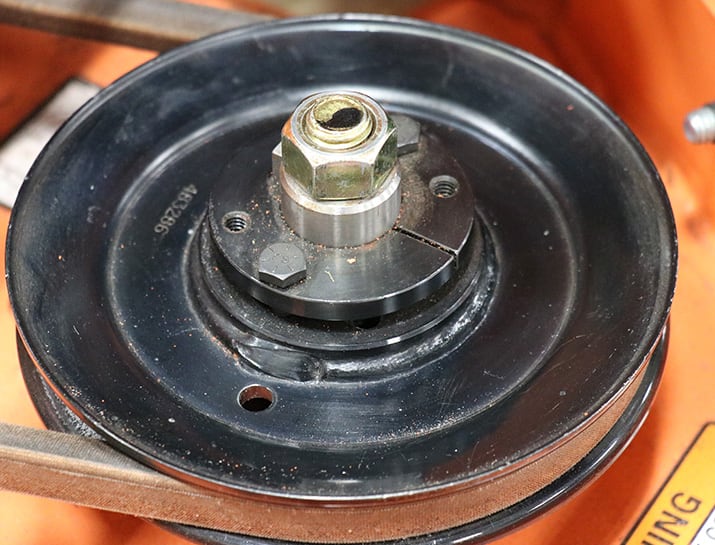
Scag mowers feature split-steel pulleys for increased
strength, reliability and reduced wear on pump and cutter deck
drive systems. Split steel pulleys are lighter in weight and stronger
than cast iron. They are also stronger than stamped pulleys.
As
split-steel pulleys are made from a single piece of steel, no balance
holes are required, unlike a cast pulley where they must be balanced
and drilled. These drill points for balancing can create weak points.
The reduced weight (less rotational inertia) of the pulleys makes it easier for
blades and other drive components to rotate up to speed. They also allow the
electric clutch brake to stop the cutter blades faster with less wear on the
clutch rotor and armature.
In short, the split-steel pulley design adds to the
life of drive components, product reliability, and reduces maintenance time and cost. |
Scag Split-Steel Pulley Benefits
- Stronger than cast-iron pulleys
- Stronger than stamped pulleys
- Lighter-weight than cast-iron pulleys = less wear and tear
on the drive systems
- No extra balance holes required / pulley is balanced
- Retains the use of taper-lock hub design for easy servicing
- Black oxide coating for reduced corrosion
- Scag uses split-steel pulleys on
all drive applications (spindles, pumps, etc)
|
How a Split-Steel Pulley is Made
The split-steel pulley addresses the many problems that have plagued
traditional pulleys for years. They are stronger than cast-iron
or stamped/riveted pulleys, balanced, lighter weight to reduce drive
wear and feature taper-lock hub design to make adjustments, removal
and reinstallation a breeze.
|
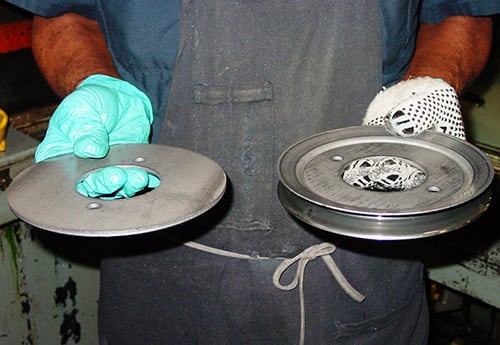
Step 1: The Blank
Here a machine operator shows a blank (on left) and a blank that
has gone through the splitting process (on right). As the pulley
blank is a single flat piece of steel, its weight is evenly proportioned
so it does not require balancing, unlike a cast pulley.
|
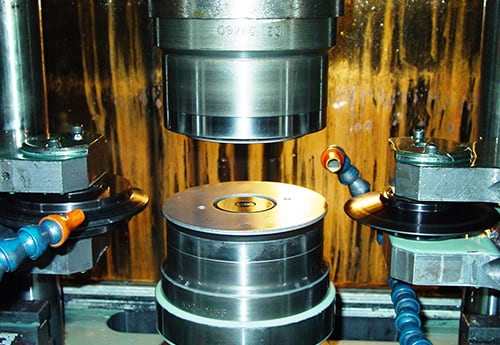
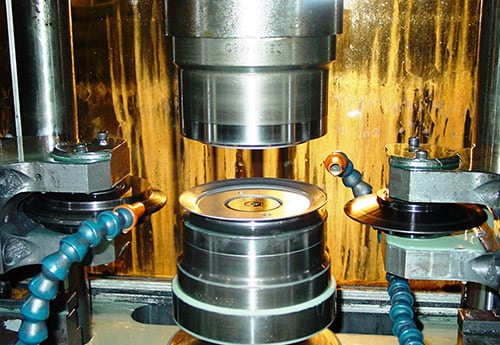
Step 2: Loading the Blank
The blank has been loaded into a machine that has a knife (on right)
and a forming tool (on left side). Once locked into place, the blank
will spin at very high RPM's while the knife and forming
tool move inward, splitting the edge of the blank open, and
forming the pulley "V" groove.
|
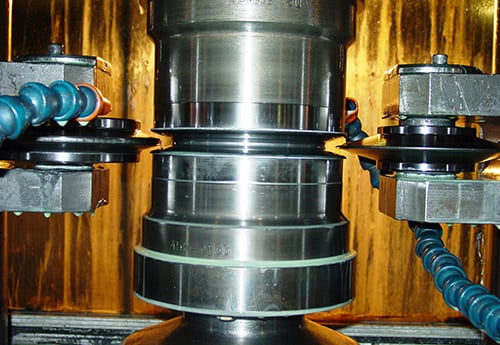
Step 3: Splitting the Pulley
Once up to speed, the knife and roll forming tool move inward and
split the edge of
the blank open, forming the pulley "V" groove.
|
Step 4: The Pulley is Formed
The machining center has released the blank which now has the proper
belt groove created around the edge. This piece of the pulley is
now finished and ready to be checked for proper tolerance.
|
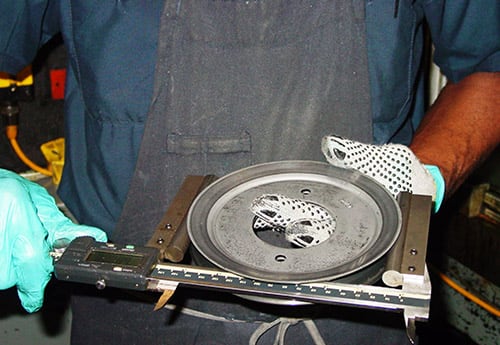
Step 5: The Pulley is Quality Checked
The machine operator verifies the piece is within tolerance. Next,
it is off to have the center hub welded into place. After that,
it will be coated with zinc phosphate for corrosion resistance.
|
|
Top of Page - Previous
Page
© 2010 Scag Power Equipment
Division of Metalcraft
of Mayville, Inc. |